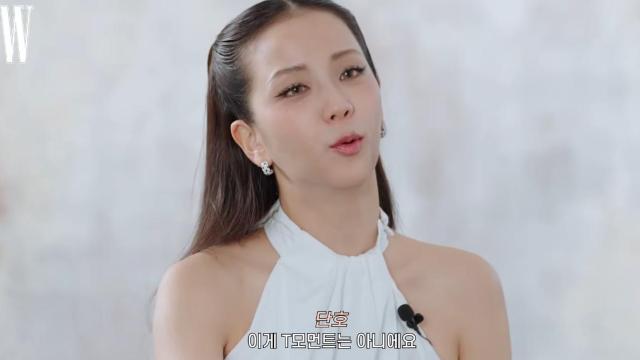
Why Are Fans Debating 'T' vs 'F' Personalities in K-Pop?
The K-pop landscape has recently been swept up in a cultural phenomenon imported from the MBTI craze: the divide between 'T' (Thinking) and 'F' (Feeling) types. When a high-profile artist like Blackpink’s Jisoo shows a more logical, problem-solving response to a sensitive situation rather than an immediate emotional outburst, it triggers a tidal wave of discourse. Fans often ask: does an idol need to visibly cry or get visibly upset to prove they 'care' about their fans or colleagues? The current conversation suggests that we are moving toward a more nuanced understanding of parasocial empathy. Instead of demanding a performative emotional reaction, the industry is beginning to value the 'T' approach—where an idol offers practical support or calm guidance during a crisis, rather than just matching the intensity of the room.
Defining the 'T' Moment: Is Logic Cold or Just Different?
Many fans perceive the 'T' personality type—characterized by those who prioritize analysis and facts over emotional mirroring—as 'cold.' However, this is a massive misunderstanding of how empathy works in a high-pressure environment like K-pop. When Jisoo or other idols face moments of vulnerability, their 'T' moments are often misinterpreted as indifference. In reality, these idols are acting as anchors, providing stability rather than escalating the distress. The following table highlights the difference between the traditional expectations fans have placed on idols and the reality of how 'T' idols process stress:
| Feature | Traditional 'F' Expectation | Modern 'T' Reality |
|---|---|---|
| Reaction to Distress | Immediate emotional mirroring (tears, empathy) | Practical analysis (problem-solving) |
| Value Proposition | Validation through shared pain | Value through stability and solutions |
| Public Perception | Seen as 'warm' and 'accessible' | Often mislabeled as 'distant' or 'logical' |
The Shift: Moving Beyond Performance-Based Empathy
As the industry matures, the Idol-Fan dynamic is shifting. We are seeing a move away from the expectation that idols must be emotional mirrors for their audience. When a star chooses not to join a chorus of public crying, it shouldn't be interpreted as a lack of heart. Instead, it signifies a healthy boundary. Today’s global fans are becoming increasingly sophisticated; they recognize that an idol’s true emotional intelligence (EQ) lies in how they manage their own headspace to continue delivering excellence. Whether it is a member of BTS navigating the military hiatus with measured professionalism or Blackpink members tackling solo careers with analytical precision, these 'T' moments are actually manifestations of psychological resilience.
Why Do We Crave Emotional Mirroring?
The pressure for idols to be 'emotional sponges' stems from the intense intimacy cultivated in K-pop. Because idols share so much of their lives, fans often feel that their favorite stars should feel exactly what they feel. However, we have to ask ourselves: are we demanding performative empathy? If an artist is simply going through the motions to satisfy a 'crying on cue' requirement, is that really an authentic connection? The 'T' moment, like those observed in recent viral clips of top-tier idols, is actually an invitation for fans to mature alongside their idols. It teaches us that compassion can exist without shared hysteria—a lesson that is arguably more vital for the longevity of a fan-artist relationship.
The Future of Idols as Human Beings, Not Just Icons
Ultimately, the discussion surrounding Jisoo and the 'T' archetype is a symptom of a larger, positive change: the humanization of the idol. By peeling back the layers of the 'idealized emotional idol,' we allow these performers the space to be human. It is perfectly fine to have a logical response to a situation. It is okay to think before you feel. As fans, if we can embrace the 'T' moments as just another facet of a complex personality, we create a healthier environment for the artists to be their authentic selves. The future of K-pop won't be defined by who cries the loudest, but by the stars who can maintain their integrity and provide genuine support, even when their reaction isn't what the script demands.
Source Article: Read the original Korean news here
#KPOP #Jisoo #Blackpink #MBTI #KpopAnalysis #IdolLife #EmotionalIntelligence #FandomCulture #BTS #MentalHealth
