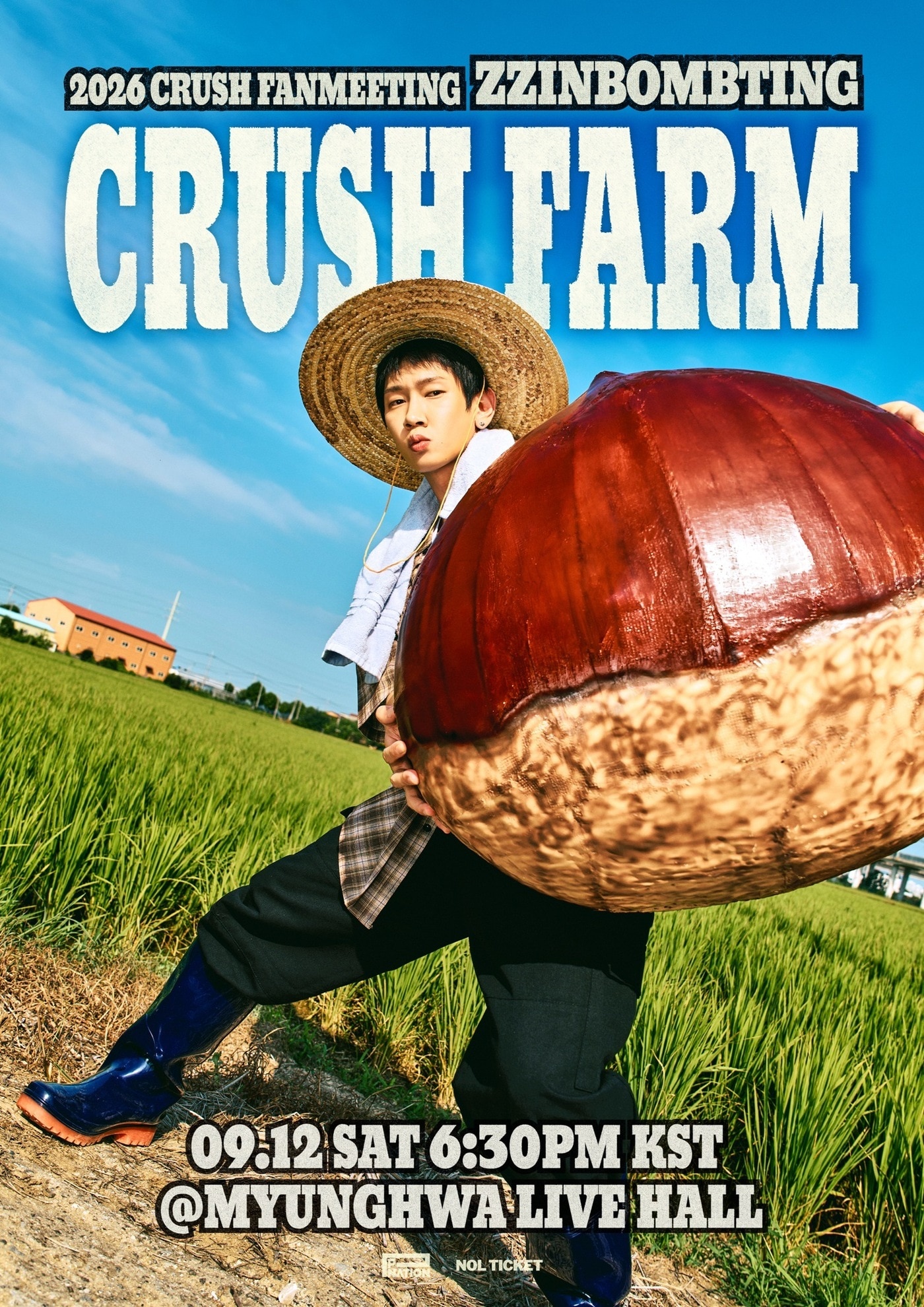
As the scale of global K-pop tours grows to stadium-sized proportions, a quiet revolution is brewing: artists are intentionally shrinking the stage to rediscover the magic of personal proximity.
While K-pop’s international footprint often focuses on high-octane choreography and massive arena aesthetics, the recent announcement of Crush’s upcoming fan meeting, 'JjinBamTing' (meaning 'Real Night Meeting'), signals a fascinating counter-trend. In an industry where distance between the idol and the fan is often used to maintain an aura of untouchable prestige, artists like Crush are opting for a raw, back-to-basics approach. This isn't just a fan event; it’s a deliberate recalibration of how solo artists cultivate long-term loyalty in a market that is increasingly feeling impersonal.
What exactly is ‘JjinBamTing’ and why the specific branding?
The term 'Jjin' is Korean internet slang for 'real' or 'authentic,' and by attaching it to 'BamTing' (night meeting), Crush is promising an atmosphere that feels unscripted and nocturnal. For fans, this translates to a sense of exclusivity that mass-market stadium tours simply cannot replicate. Unlike the choreographed perfection of a global tour, JjinBamTing is positioned as a living-room session. It’s an intentional departure from the polished, distant persona of an 'idol-star,' opting instead for the relaxed, soulful vibe that has defined his career since his early days in the K-R&B scene. This move is a savvy acknowledgment that today’s fans are craving transparency and authentic, low-pressure dialogue over pyrotechnics.
Why are major soloists suddenly pivoting toward smaller, fan-centric gatherings?
We are currently witnessing a shift in the Fandom Economy. While agencies often push for high-revenue global tours, savvy artists understand that retention is driven by Parasocial Equity—the emotional bank account fans build with their favorite artists. By prioritizing a 'closer' environment, Crush is effectively lowering the barrier to entry for fans to feel 'seen.' This isn't just about marketing; it’s about brand differentiation. In a saturated market, your ability to make a fan feel like a friend is becoming more valuable than your ability to sell out an arena. This is the Intimacy Pivot, where success is measured by the depth of engagement rather than the sheer volume of attendees.
Is this an ‘Anti-Idol’ stance or a new industry necessity?
It would be a mistake to call this an anti-idol move; rather, it is an evolution of the Korean entertainment blueprint. Many soloists who emerged from the R&B and Indie scenes, like Crush, have always relied on their lyrical honesty to secure their fanbases. By stripping away the bells and whistles of a standard concert, they are reinforcing their identity as storytellers first. We are seeing a trend where even the biggest names—often drawing inspiration from the legendary, unfiltered fan-interactions of senior acts—are looking for ways to cut through the digital noise. It’s a return to the roots of the 'concert' experience, where the barrier between the microphone and the audience feels permeable.
What can global fans expect from this shift in the long run?
As the industry continues to globalize, the 'intimate event' model is becoming a premium commodity. If you look at the trajectory of successful legacy acts, they all hit a point where organic connection outweighs massive stage production. For international fans, this raises the question: will these 'Jjin' style events be exported? While travel restrictions and logistical hurdles make small-scale events harder to scale globally, we are already seeing a rise in 'boutique' tours and fan-exclusive showcases. The industry is realizing that the future of K-pop isn't just about how big you can get, but how close you can keep your core audience when the cameras are off.
How does this compare to the standard K-pop fan engagement strategy?
In a standard idol setup, fan meetings are often highly structured, heavy on fan-service 'games,' and strictly managed by label executives to prevent any 'uncontrolled' moments. Crush’s approach, however, leans into his unique position as a soloist with a strong R&B pedigree. He doesn't have to follow the rigid protocols of a K-pop dance group. This gives him the agency to facilitate events that feel more like a community gathering than a corporate promotion. It’s this Creative Autonomy that allows him to build a brand that feels timeless, proving that even in a world of algorithmic pop-production, the human connection remains the most potent currency.
Source Article: Read the original Korean news here
#Crush #JjinBamTing #KPopTrends #KRandB #FandomEconomy #IdolCulture #KMusic #FanEngagement #SoloistEra #BTS

